

History of
Chair Volleyball
From a Dutch gymnasium in 1956 to the Paralympic Games, 70+ nations, and the founding of the world's first professional senior chair volleyball league — this is the story of a sport that refuses to sit still.
Born in the
Netherlands,
1956
Chair volleyball — known internationally as sitting volleyball — was invented in the Netherlands in 1956. Dutch sports administrators were searching for a competitive team sport that could be played by athletes with physical disabilities, particularly veterans who had lost limbs or suffered mobility impairments.
The solution was elegant: take the explosive, fast-paced nature of volleyball and adapt it for athletes playing from a seated position on the floor. The game fused elements of sitzball — a German seated ball game — with standard volleyball rules, creating something entirely new.
The Dutch Sports Committee refined the rules through the late 1950s and early 1960s, establishing the smaller court dimensions, lower net height, and the critical rule that players must keep their pelvis in contact with the floor at all times during play.
What began as a rehabilitation sport quickly revealed itself to be something far more powerful: a fiercely competitive, athletically demanding game that showcased the extraordinary capabilities of athletes who refused to let physical limitations define them.

Netherlands · 1956 — The sport that changed everything
The Complete Timeline
The Dutch Invention
Sitting volleyball was invented in the Netherlands as a fusion of two existing sports — sitzball (a German game played seated) and volleyball. The Dutch Sports Committee developed the game specifically to give disabled athletes a competitive, high-energy team sport that could be played at full intensity from a seated position.
First International Competition
The sport crossed national borders for the first time when the Netherlands hosted an international sitting volleyball tournament. Teams from across Europe competed, proving the game had universal appeal beyond its Dutch origins and laying the groundwork for a global governing body.
World Organization Founded
The World Organization Volleyball for Disabled (WOVD) was established, creating the first formal international governing structure for the sport. This body would later evolve into World ParaVolley, the organization that governs the sport globally today.
Paralympic Debut — Arnhem
Sitting volleyball made its Paralympic Games debut at the 1980 Arnhem Paralympics in the Netherlands — men's competition only. The Netherlands, the sport's birthplace, took home the inaugural gold medal. This milestone cemented sitting volleyball as a premier Paralympic discipline and launched decades of international growth.
Women Enter the Paralympics
Women's sitting volleyball was introduced at the 1993 European Championships, signaling a major expansion of the sport. The women's game quickly developed its own fierce competitive identity, with powerhouses like the USA, China, and Brazil emerging as dominant forces.
Women's Paralympic Debut — Athens
Women's sitting volleyball made its Paralympic debut at the Athens 2004 Games. China won the inaugural women's gold medal, beginning a dynasty that would define the women's game for years. The Athens Games drew massive global attention to the sport and sparked a wave of new national programs worldwide.
World ParaVolley Established
The sport's governing body was formally renamed World ParaVolley, reflecting a broader mission to develop all forms of para-volleyball globally. Under this banner, the organization expanded development programs to Africa, Asia, and the Americas, growing the sport to over 70 member nations.
Rio Paralympics — Global Spotlight
The Rio 2016 Paralympic Games brought sitting volleyball to one of the largest global audiences in the sport's history. Brazil's passionate home crowd packed arenas, and the USA men's team delivered a stunning gold medal performance. The broadcast reached hundreds of millions of viewers worldwide.
Tokyo 2020 — Resilience on the World Stage
Held in 2021 due to the COVID-19 pandemic, the Tokyo Paralympics showcased the sport's resilience. Despite empty arenas, the competition was fierce. The Russian Paralympic Committee men's team and China's women's team claimed gold, with the USA, Brazil, and Iran all delivering memorable performances.
Paris Paralympics — A New Era
The Paris 2024 Paralympic Games elevated sitting volleyball to new heights of production quality and global viewership. With state-of-the-art venues and record streaming numbers, the sport entered a new era. Over 70 nations now field national sitting volleyball programs, with the sport growing rapidly in Africa, Southeast Asia, and Latin America.
CVL™ — Chair Volleyball for Senior Athletes
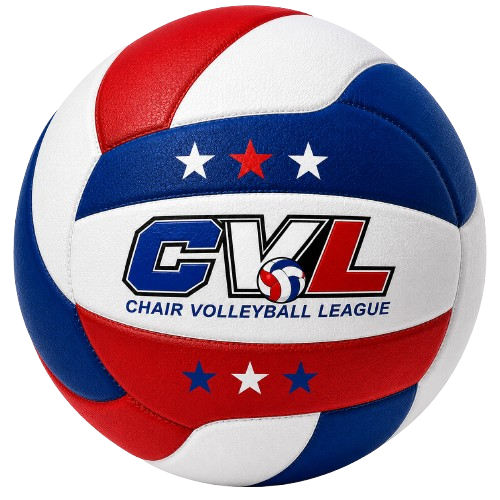
The Chair Volleyball League™ (CVL™) launches as the world's first professional chair volleyball league exclusively for athletes 50 and older. Combining the rich heritage of sitting volleyball with a bold new vision for senior athletic excellence, the CVL™ is building the healthiest generation of senior athletes in the world — with The Road to Vegas™ World Championship as its crown jewel.

44 Years in the
Paralympic
Games
Sitting volleyball has been part of the Paralympic Games since 1980 in Arnhem, Netherlands — making it one of the longest-tenured Paralympic sports. The men's competition debuted first, with women's sitting volleyball joining the program at the Athens 2004 Games.
The sport has produced some of the most dramatic moments in Paralympic history. The USA men's team's gold medal run at Rio 2016 captivated audiences worldwide. China's women's dynasty — winning gold at Athens 2004, Beijing 2008, London 2012, and beyond — stands as one of the greatest sustained runs of excellence in Paralympic sport.
Iran, Bosnia & Herzegovina, the Netherlands, Brazil, and Russia have all produced world-class programs, making sitting volleyball one of the most globally competitive Paralympic disciplines.
At Paris 2024, the sport reached new heights of production quality and global viewership, with record streaming numbers and packed arenas cementing its status as a marquee Paralympic event.
USA
Men's Gold — Rio 2016
China
Women's Dynasty — 4x Gold
Iran
Top 3 Men's Program
How Chair Volleyball Is Played
Chair volleyball follows most standard volleyball rules with key adaptations that make it uniquely demanding and exciting.
Court Size
10m × 6m — smaller than standing volleyball to suit seated play
Net Height
Men: 1.15m · Women: 1.05m (lower than standing volleyball)
Seated Play
Players must keep their pelvis in contact with the Chair at all times
Blocking
Blocking the serve IS permitted — unlike standing volleyball
Team Size
6 players on court, 15-player roster per match
Scoring
Rally scoring, best of 3 sets (15 pts win by 2. Tournament Play is played differently
Movement
Players move their arms while remaining in their seats at all times
Eligibility
Originally for athletes with physical impairments; CVL opens the sport to all seniors 50+
The Key Difference: Blocking the Serve is Legal
Unlike standing volleyball, sitting volleyball allows players to block the serve — a rule that dramatically changes strategy and creates explosive, fast-paced rallies from the very first contact. This single rule difference makes sitting volleyball one of the most tactically unique net sports in the world.
Chair Volleyball
Around the World
From its Dutch origins, sitting volleyball has spread to every inhabited continent. Over 70 nations now field national programs, with the sport growing fastest in Africa and Southeast Asia.
Europe
Key Nations
Netherlands, Germany, Bosnia & Herzegovina, Iran (European zone), Russia, Czech Republic, Turkey
The birthplace of the sport. The Netherlands invented sitting volleyball in 1956 and Europe remains the deepest competitive region, with multiple nations capable of winning world titles.
Americas
Key Nations
USA, Brazil, Canada, Mexico, Colombia, Peru
The USA men's team is a perennial gold medal contender and won gold at Rio 2016. Brazil's passionate fan base and growing youth programs make the Americas one of the fastest-growing regions.
Asia & Oceania
Key Nations
China, Japan, South Korea, Australia, Indonesia, Thailand
China's women's team is the most dominant force in the sport's history, winning multiple Paralympic and World Championship gold medals. Japan and South Korea are rapidly developing elite programs.
Africa
Key Nations
Rwanda, Egypt, Morocco, Nigeria, South Africa, Kenya
Africa is the sport's fastest-growing region. Rwanda has emerged as a continental powerhouse, and World ParaVolley's development programs have seeded programs in over 15 African nations since 2012.
Middle East
Key Nations
Iran, Egypt, Jordan, UAE, Saudi Arabia
Iran is one of the world's elite sitting volleyball nations, consistently competing for Paralympic medals. The Middle East region has seen explosive growth, with Iran's men's team ranking among the top 3 globally.

70+
Nations with Active Programs
Chair Volleyball
for Senior
Athletes
While sitting volleyball was originally developed for athletes with physical disabilities, the sport's explosive, low-impact nature makes it uniquely ideal for senior athletes. The seated format eliminates the jumping, running, and high-impact movements that make traditional sports difficult for athletes over 50 — while preserving every ounce of competitive intensity.
Research consistently shows that competitive team sports dramatically improve physical health, cognitive function, social connection, and mental well-being in older adults. Chair volleyball delivers all of these benefits while adding the thrill of professional-level competition.
The Chair Volleyball League™ (CVL™) was founded on this insight: that athletes 50 and older deserve a professional league built specifically for them — with world-class competition, elite training programs, and a championship worthy of their dedication.
The CVL™'s mission — "Building the Healthiest Generation of Senior Athletes in the World" — is not just a tagline. It is the continuation of a 70-year tradition of using chair volleyball to prove that athletic excellence has no age limit.
Train with Purpose. Compete with Pride. Inspire for Life.

The Road to Vegas™
The CVL™ World Championship™ continues a 70-year tradition of chair volleyball excellence. Join the league that's writing the next chapter of this incredible sport.